.jpg)
April is when many owners find out how well their cars have really been stored.
The days get longer, the roads dry out, and the first proper drive of the year is finally within reach. The expectation is simple —turn the key, and the car is exactly as it was when it was put away.
But that’s not always what happens.
Flat batteries. Damp interiors. Tyres that don’t feel quite right. Small issues that weren’t there before — or weren’t noticed.
None of it dramatic. All of it avoidable.
Because in most cases, the problem isn’t the car.
It’s how it’s been stored.
“People think storage is just about keeping a car safeand out of the way,” says Lee Sullivan, General Manager at Birch. “But that’s only part of it. What matters is what happens while the car is sitting there.”
That’s the part most owners don’t see.

What Happens When Nothing Happens
Classic and performance cars don’t respond well to beingleft.
They change slowly.
Moisture moves through the air. Materials absorb it.Tyres settle under weight. Batteries discharge. Fluids sit longer than theyshould.
Individually, none of these changes are significant.
Over time, they add up.
“The issues we see are rarely big failures,” says ZaakAndrews, Vehicle & Media Specialist at Birch. “It’s small things thathave been left long enough to become noticeable. The car looks fine, but it’snot quite where it should be.”
That’s the risk with traditional storage.
It’s passive.
You lock the door, and everything is assumed to stay thesame.
But it doesn’t.

Why “Good Enough” Storage Isn’t Good Enough
Most storage setups are built around convenience.
A clean garage. A cover. Maybe a charger. It feelsresponsible, and for a while, it works.
But what’s missing is control.
Temperature moves. Moisture fluctuates. The environmentchanges with the weather. There’s no consistent oversight, no structuredprocess, no clear understanding of how the car is evolving over time.
“Consistency is the key thing,” says Tom Chilton,Commercial Director at Birch. “If the car is in a stable environment and youknow exactly what’s happening with it, you remove most of the risk straightaway.”
That consistency is where most setups fall short.
They protect the car from obvious threats.
But they don’t manage the subtle ones.
.jpg)
Integrated Excellence — Why It Matters
This is where the difference lies.
At Birch, storage isn’t treated as a single service. It’spart of a wider system — what we refer to as Integrated Excellence.
That means security, environment, handling, oversight andlogistics are all connected.
Not separate functions, but one controlled approach.
Because the outcome depends on how those elements worktogether.
A car can be secure, but poorly handled.
It can be clean, but stored in the wrong conditions.
It can be left untouched, but slowly drifting away fromits best condition.
Integrated Excellence removes those gaps.
It ensures that from the moment a car arrives, throughits time in storage, to the point it leaves again, every stage is controlledand consistent.
No assumptions. No weak links between processes.
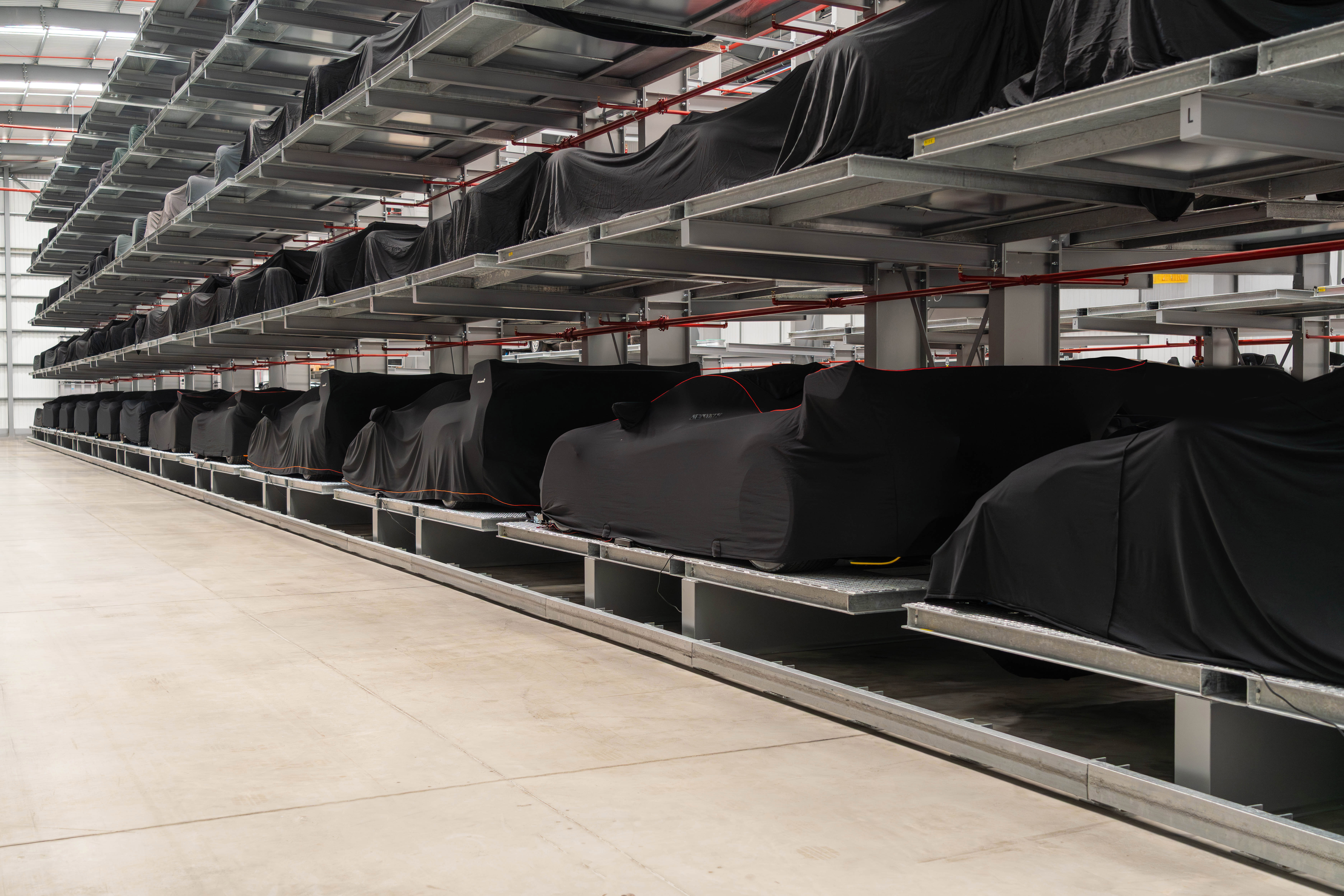
The Birch Standard in Practice
The Birch Standard is simply what that looks like inreality.
Cars are properly checked when they arrive, so there is aclear understanding of their condition. The environment they are kept in isstable, not left to fluctuate. Vehicles are overseen regularly, so smallchanges are picked up early.
Nothing is left to chance.
“You should be able to come back to a car and knowit’s right,” says Chilton. “Not hope it is — know it is. That comes fromhaving a proper system behind it.”
That system is what most storage solutions lack.
Not because they are careless, but because they are notdesigned to manage cars as assets over time.
.jpg)
A Simple Question
There’s an easy way to think about it.
When you put your car away, are you storing it?
Or is it being looked after?
If it’s just being stored, then everything depends onwhat doesn’t go wrong.
If it’s being managed properly, the outcome iscontrolled.
That distinction becomes clear in April.
When the car comes back out, it either feels exactly asi should.
Or it doesn’t.
.jpg)
Don’t Find Out the Hard Way
Most owners don’t realise there’s a problem until theyreturn to the car.
By then, the changes have already happened.
“The mistake is thinking nothing’s happening when thecar’s not being used,” says Sullivan. “In reality, that’s wheneverything’s happening — just slowly.”
That’s why storage alone isn’t enough.
Because it only answers where the car is.
Integrated custody — built on Integrated Excellence —answers how it’s being managed.
And that’s what ultimately protects it.



.jpg)
Blog Categories