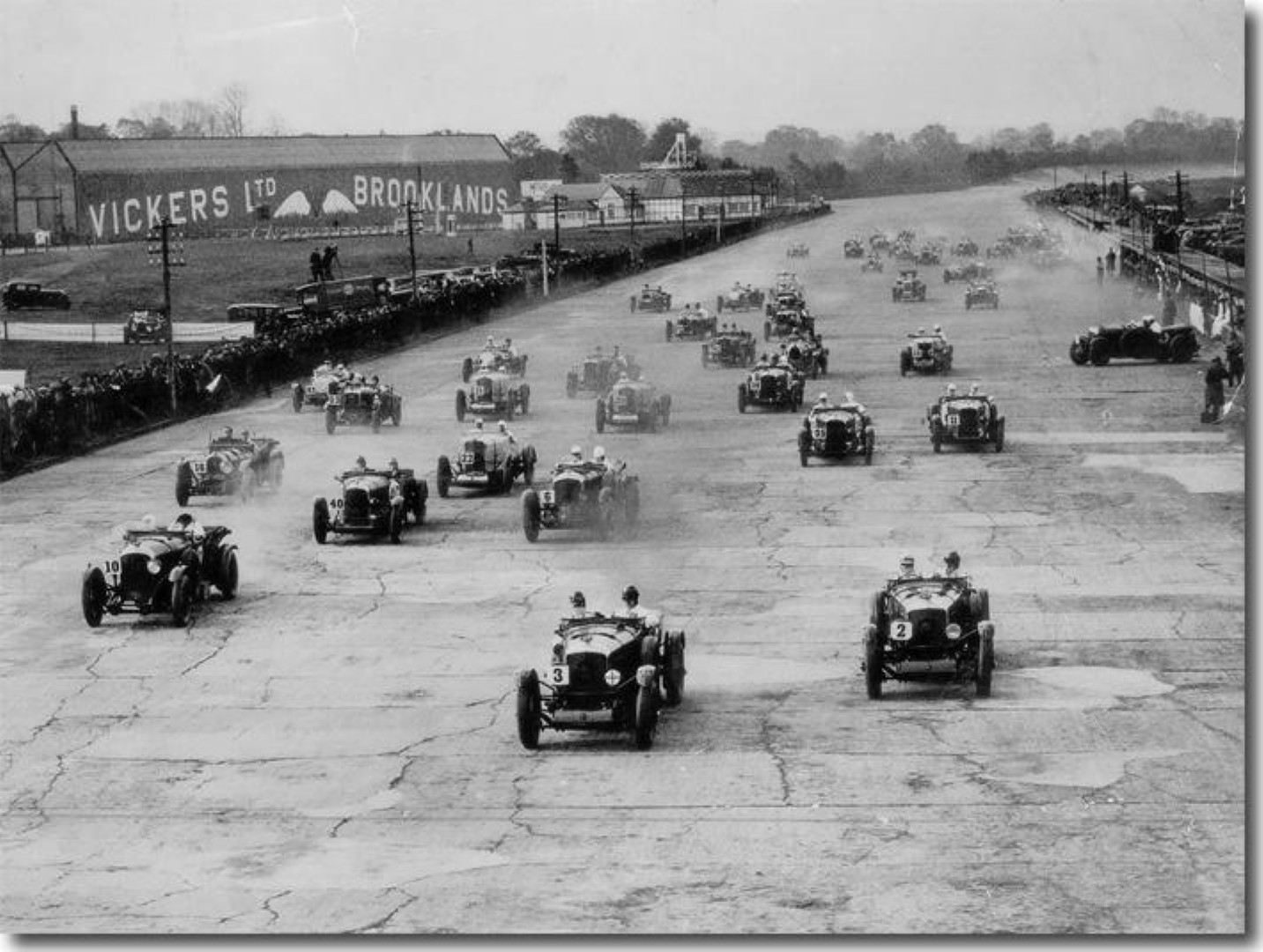
There are circuits that host racing.
And there are places that change how performance itself is understood.
Brooklands sits firmly in the second category — not because of what happened there, but because of what it revealed.
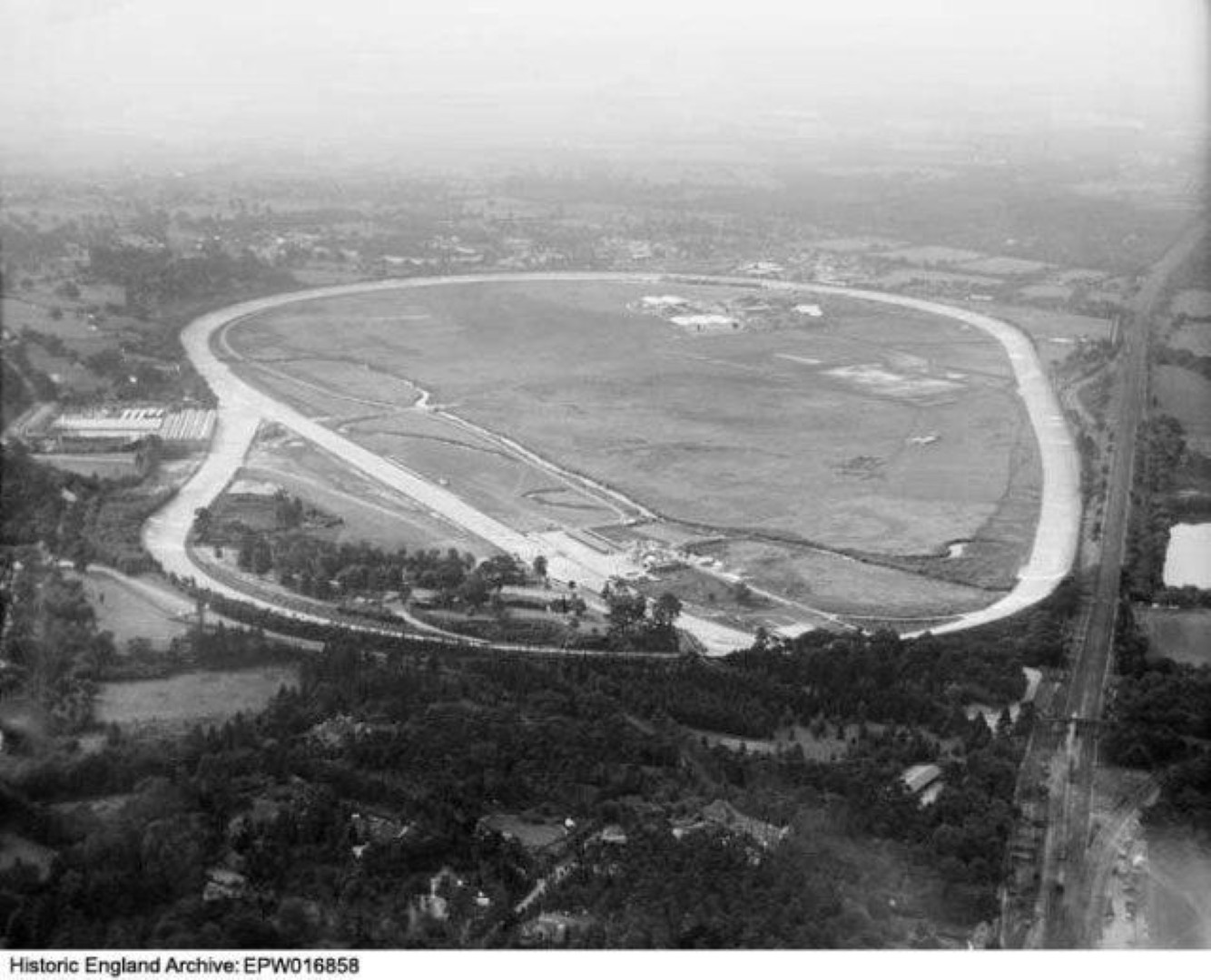
When it opened in 1907, Brooklands created something that had not previously existed: a controlled environment where cars could be run at sustained high speed and, for the first time, observed properly under those conditions. Before that, speed was fragmented — a hill climb here, a straight-line run there — each shaped by road surface, gradient, weather and circumstance. A car could produce an impressive number, but that number meantvery little beyond the moment.
Brooklands made performance repeatable.
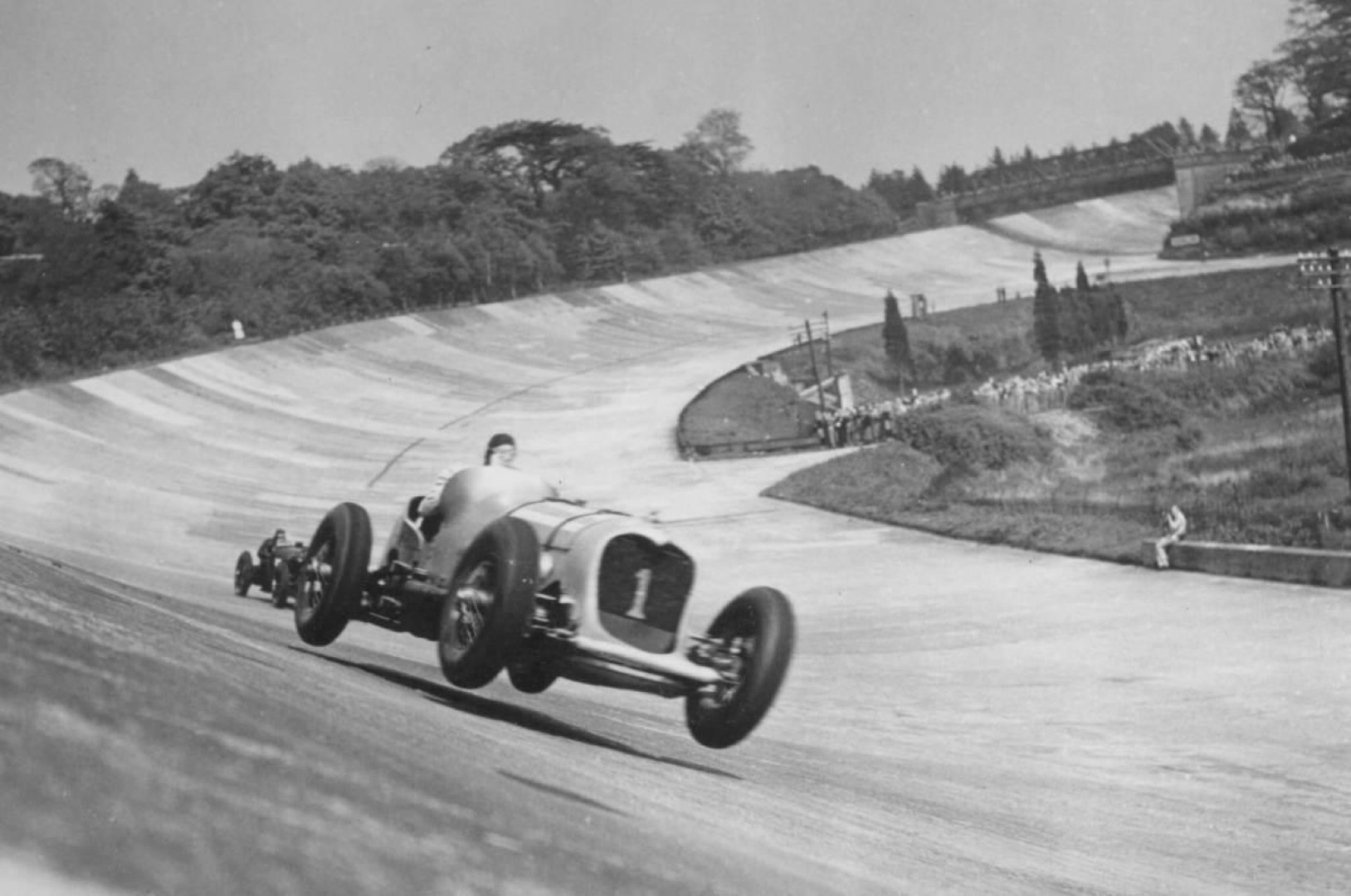
The circuit’s defining feature — its vast, steep concrete banking — allowed cars to run continuously at high speed. That simple shift exposed a more complex truth. Performance is not defined by what a car can achieve once, but by what it can sustain.
Engines that produced strong outputs over short distances began to fail under continuous load. Cooling systems, sized for intermittent use, could not dissipate heat quickly enough when the engine was held at high RPM. Oil systems struggled to maintain pressure as sustained lateral forces moved fluid away from pickup points. Tyres, still in their infancy as a technology, degraded rapidly as heat built and structural limits were exceeded.
Brooklands did not make cars faster.
It made their weaknesses visible.
That visibility forced change. Engineers began to design notjust for output, but for stability. Cooling systems grew in capacity and efficiency. Lubrication systems were redesigned to function under sustained load. Materials were selected with fatigue in mind, not just strength. The shift from “fast” to “reliably fast” begins here.
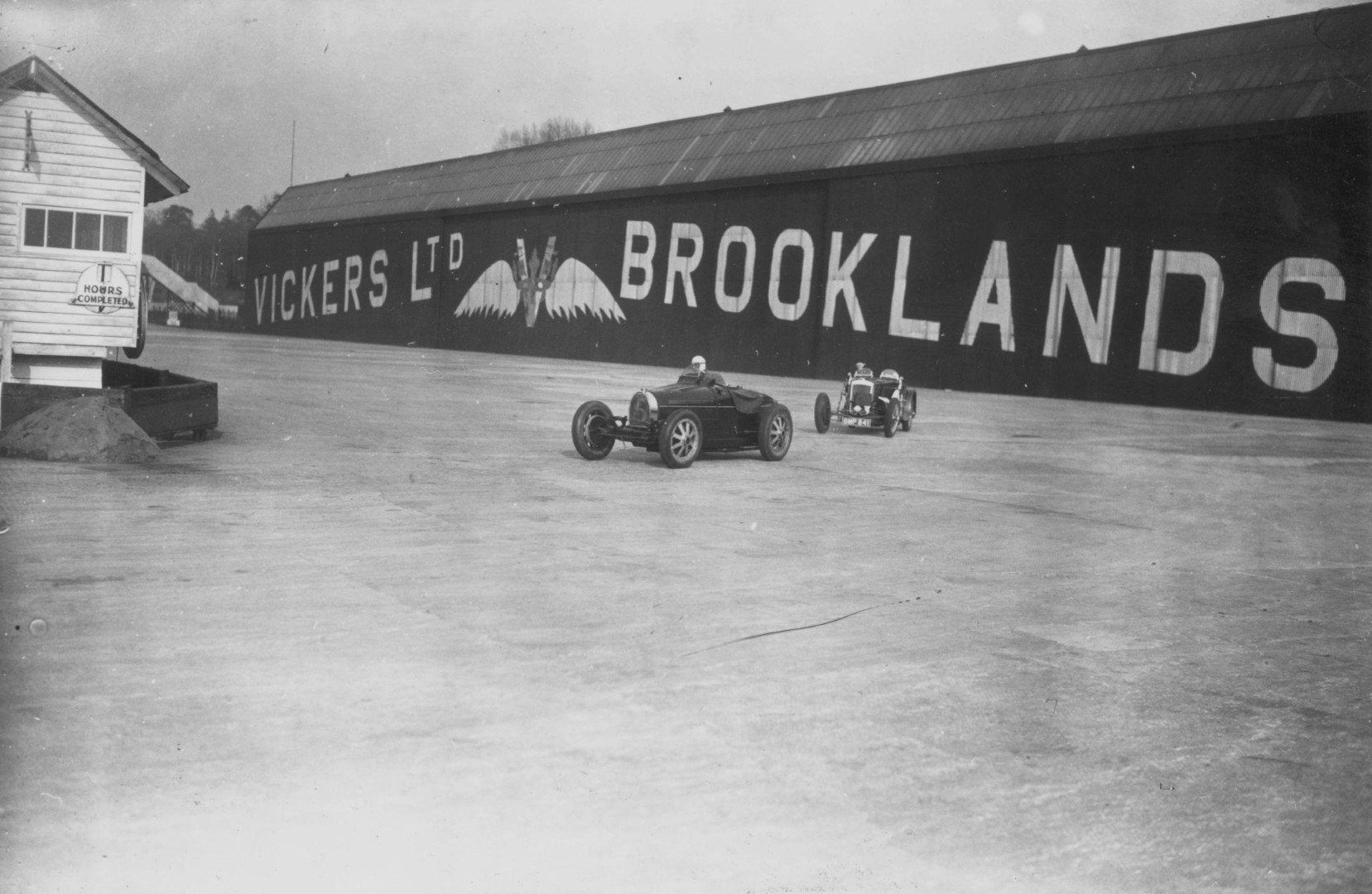
The examples are well known, but their significance is often simplified. The Blitzen-Benz breaking the 200 km/h barrier at Brooklands was not just a headline moment. It was a demonstration that extreme performance could be measured accurately and repeated under consistent conditions. That transformed speed from a claim into something closer to data.
Cars like the Napier-Railton extended that idea further. Built for sustained high-speed running, it demonstrated that true performancelay in consistency. It could maintain pace over time, reinforcing the principle that endurance — mechanical and operational — was as important as outright power.
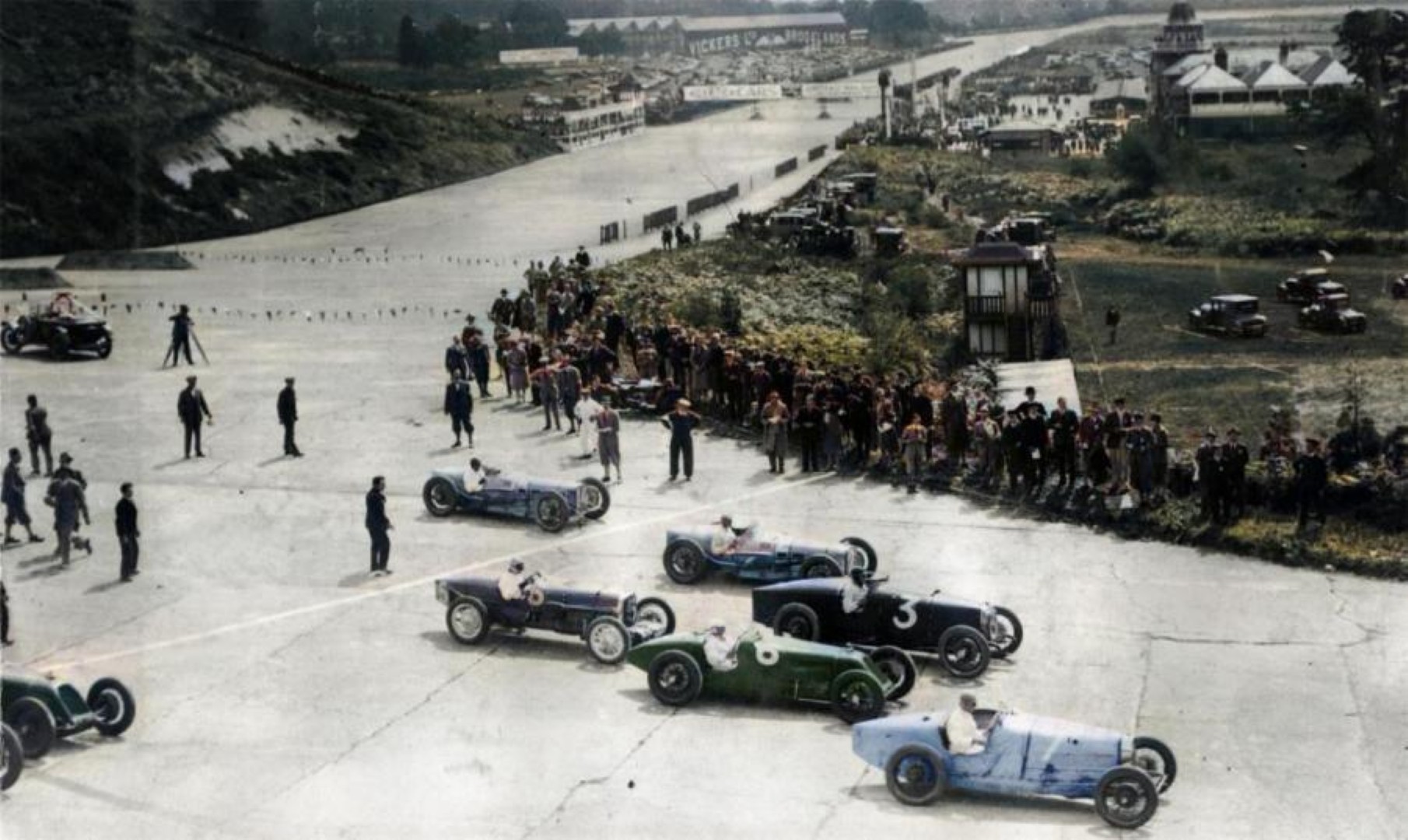
Manufacturers understood the implications. Bentley used Brooklands as a proving ground for durability, refining the engineering that would underpin its Le Mans success. Mercedes-Benz and Sunbeam pursued similar objectives, recognising that speed without stability had limited value.
Brooklands was not just testing cars.
It was redefining what performance meant.
But the influence of Brooklands was not purely technical. It was also cultural.
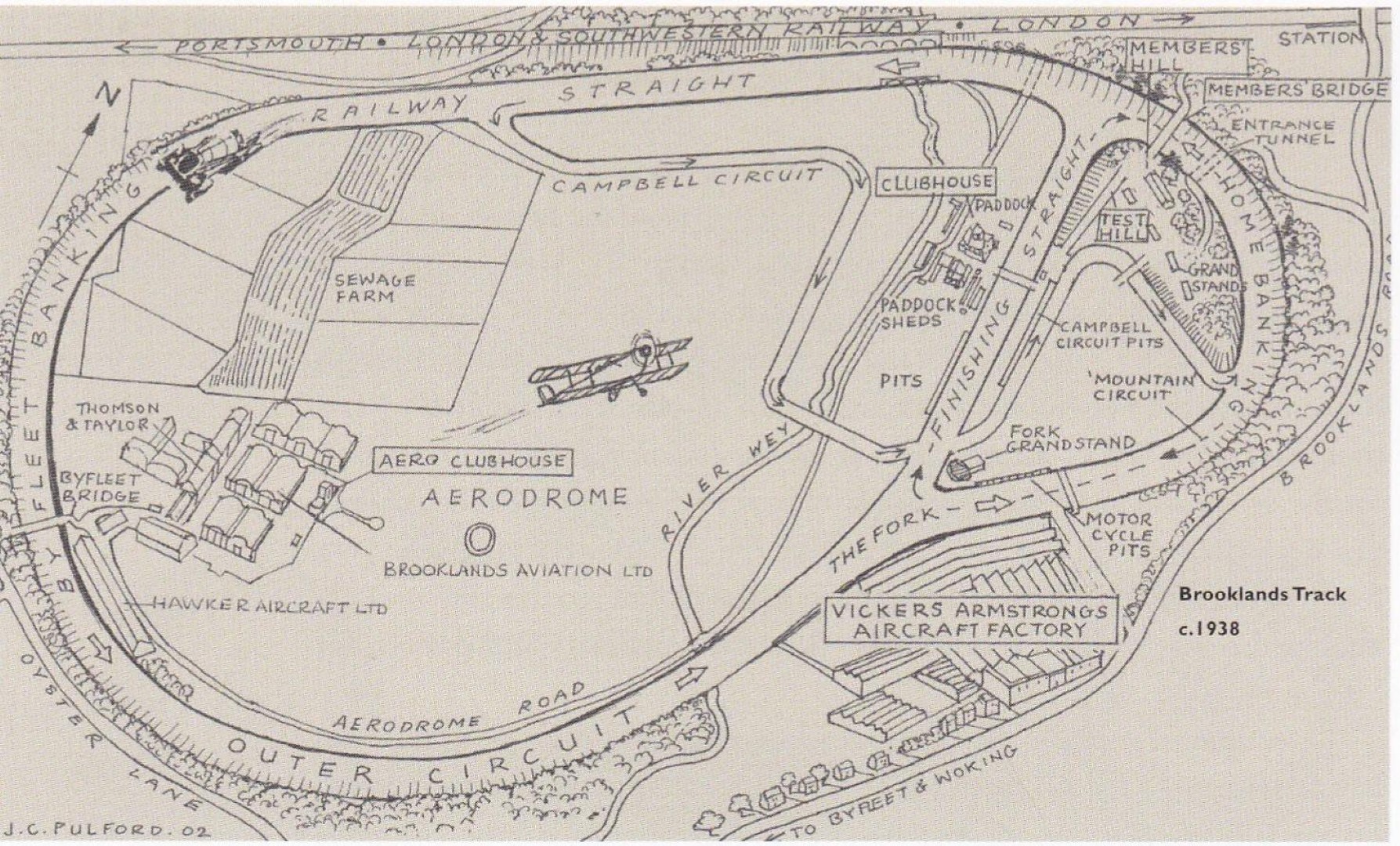
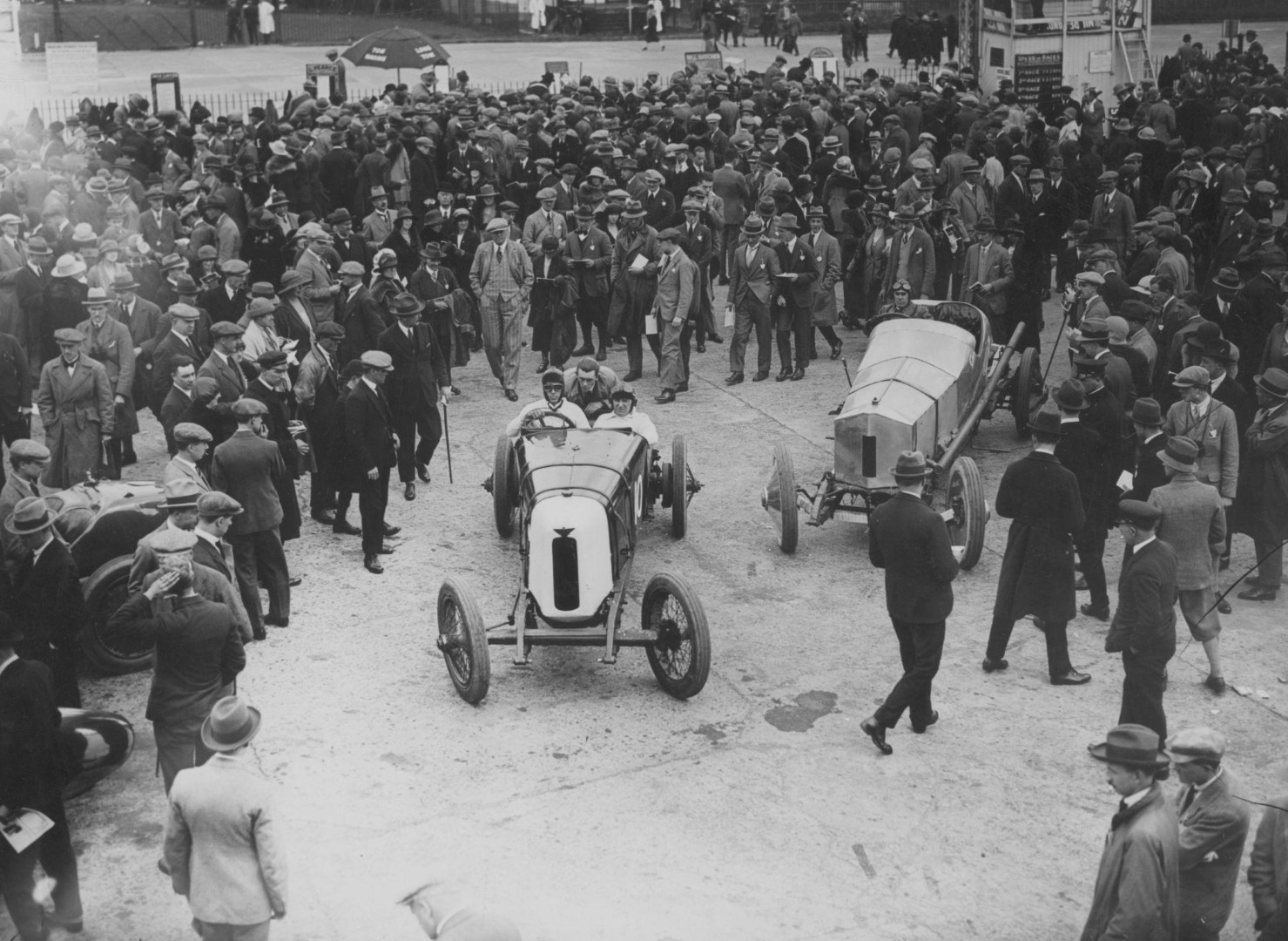
The circuit became a meeting point for engineers, drivers, industrialists and enthusiasts. The paddock was not a passive environment. It was analytical. Conversations focused on why one car maintained speed while another faded, why certain engines remained stable while others degraded. The clubhouse extended those discussions, creating a feedback loop between observation and development.
This created a culture of informed judgement.
People began to recognise that performance was not about isolated figures. It was about behaviour. A car that could achieve a high speed once was fundamentally different from one that could sustain near that speed repeatedly. That distinction shaped both engineering priorities and competitive thinking.
Brooklands enforced that perspective physically. The surface was unforgiving. The banking imposed continuous load. Small imbalances in chassis or suspension became magnified at speed. Drivers spoke of the effort required to keep a car stable, of the way it communicated every inconsistency. Brooklands did not flatter cars.
It exposed them.
That principle carries directly into modern engineering.
Today’s tools — wind tunnels, simulation environments,telemetry — provide far greater precision, but they are solving the same problem. How does a car behave under sustained load? How stable is it when pushed beyond casual use? How consistently can it deliver performance?
In endurance racing, particularly in the FIA World Endurance Championship, this is explicit. Cars must operate at high load for hours,managing thermal stress, tyre degradation and mechanical fatigue. Performance is defined not by peak lap time, but by the ability to maintain pace over an entire stint.
Brooklands revealed that requirement in its earliest form.
Performance is not a moment.
It is a condition.
That condition, however, is not fixed.
Once a car leaves the factory, it begins to change. Fluids degrade through thermal cycling and oxidation. Rubber components lose elasticity. Electrical systems depend on stable voltage and regular operation to maintain calibration. Left unmanaged, a car will not fail immediately, but it will drift — gradually, subtly — away from its intended state.
This is where Brooklands remains relevant beyond history.
It provides a reference point for how performance should beunderstood in ownership. Performance is dependent on conditions. Control those conditions, and performance remains consistent. Ignore them, and it becomes variable.
At Birch’s Brooklands facility, that principle is applied deliberately. The objective is not to preserve cars as static objects, but to maintain them as operating systems. Temperature stability reduces thermal stress. Battery management maintains electrical integrity. Mechanical systems are kept within defined parameters to prevent drift.
The result is not visible in appearance.
It is evident in behaviour.
Brooklands is the right place for that approach, not becauseof its heritage alone, but because of what that heritage represents. It is alocation defined by the idea that performance must be understood, measured and maintained.
Today, that continuity is visible in the site itself. Brooklands Museum preserves the machines and context of early experimentation,while Mercedes-Benz World provides a modern environment where performance canbe explored with precision. Together, they represent a progression — from discovery to refinement.
Birch’s presence sits within that progression.
Not as a statement.
But as a continuation.
Because once performance becomes measurable, it becomes astandard.
And once it becomes a standard, it demands to be maintained.
Brooklands is where that expectation began.
It remains the benchmark.


.jpg)

.jpg)