.jpg)
For most owners, car storage is seen as a simple decision.
Find somewhere secure. Park the car. Lock it away.
But that only answers one question — where the car sits.
It doesn’t answer the more important one: how it is being managed.
Because for high-value vehicles, the risk is rarely one single failure. It’s the accumulation of small inconsistencies over time. A car can be secure, but poorly handled. Clean, but stored in the wrong conditions. Moved correctly, but without any clear record of its condition.
Individually, none of those issues seem significant. Together, they define whether a car holds its condition — and ultimately its value.
That’s the gap between storage and custody.
“People think of storage as something passive,” says Tom Chilton, Commercial Director at Birch. “But the reality is, if you’re not actively managing the car, you’re leaving things to chance. And with high-value cars, that’s where problems start.”
At its core, traditional storage is fragmented. Security sits in one place, environment in another, handling depends on who is available, and transport is often treated as a separate service altogether. There is no single system controlling how those elements work together.
.jpg)
That lack of integration is where risk lives.
A car might be perfectly safe from intrusion, but slowly deteriorating because the environment isn’t stable. It might be stored carefully, but damaged during a routine movement. It might arrive in good condition, but leave without any clear record of what has changed.
The issue isn’t that each part fails. It’s that nothing connects them.
At Birch, the focus is on custody — not storage.
That means treating the car as an asset within a controlled system, where every stage is understood and managed. What happens when the car arrives. How it is handled. The conditions it is kept in. How it is monitored. How it leaves.
It’s a continuous process, not a static state.
“The biggest difference is knowing exactly what you’ve got at any point in time,” Chilton explains. “When you’re racing, you need to understand the car — how it feels, how it’s behaving. It’s no different here. You don’t want guesswork.”
.jpg)
That clarity starts from the moment a car arrives.
Condition is documented properly. Not just visually, but in a way that creates a baseline. From that point on, there is no reliance on memory or assumption. Everything is known, not estimated.
From there, the emphasis shifts to control.
The environment is kept stable, not artificially manipulated. That distinction matters. Fluctuation — in temperature, in moisture, in air quality — is what causes long-term degradation. Interiors suffer. Materials age. Mechanical components begin to drift away from where they should be.
But even the right environment isn’t enough on its own.
Without oversight, small changes go unnoticed. Tyre pressures drop. Batteries discharge. Minor issues develop into larger ones. None of it dramatic, but all of it consequential.
“Most problems don’t happen in one moment,” Chilton says. “They build up. That’s what you’re trying to prevent — the slow drift away from where the car should be.”
.jpg)
Handling is another area where that discipline matters.
It’s easy to assume that risk exists on the road. In reality, some of the highest-risk moments happen at low speed — moving a car, positioning it, loading it for transport. Those are the points where control matters most.
Without a defined process, those moments depend on experience and judgement.
With a system, they become consistent.
The same applies to logistics. Movement is not separate from storage. It’s part of the same chain. If that chain is broken — if standards drop between locations or providers — the condition of the car becomes variable.
Integrated custody removes that break.
It ensures that whether a car is arriving, being stored, or leaving for an event or client, the same level of care applies throughout.
For many clients, the biggest shift is visibility.
Cars are often stored and left unseen for long periods. Condition is assumed. Details fade. That works until something goes wrong.
.jpg)
Custody changes that dynamic.
There is always a clear understanding of the car’s condition. Not just at the point it was stored, but throughout its time under management. That removes uncertainty — and with it, a large part of the risk.
“You want to come back to a car and know it’s right,” Chilton says. “Not hope it is. Know it is.”
That becomes even more important as collections grow.
What works for one or two cars rarely works for ten or twenty. Scale introduces complexity, and complexity introduces gaps. Without a structured system, those gaps widen over time.
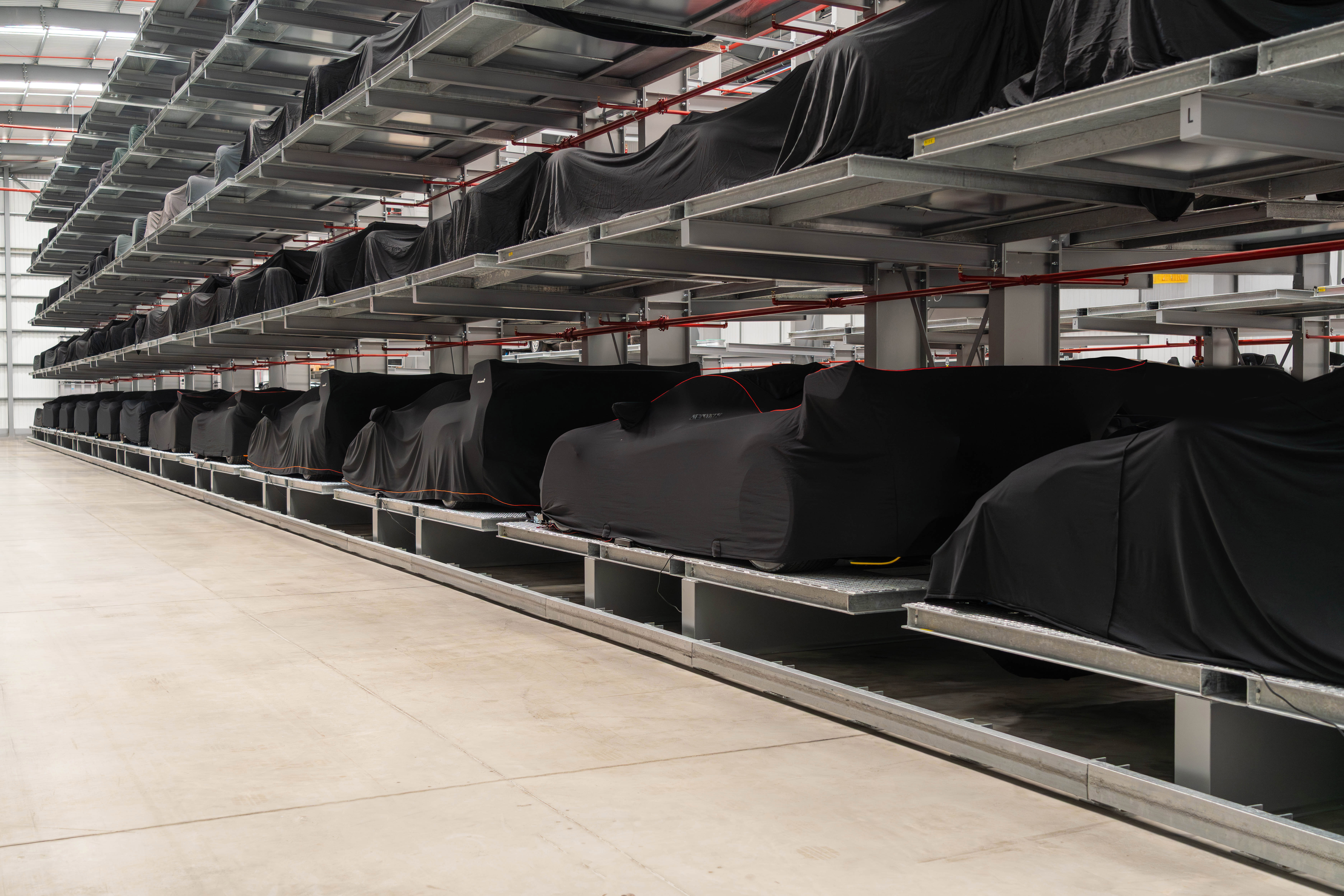
The nature of ownership is changing as well.
Cars are no longer just driven and enjoyed. They are managed, moved, presented, sometimes traded. Their condition and provenance matter more than ever.
In that context, storage on its own is no longer enough.
It doesn’t provide control.
It doesn’t provide visibility.
And it doesn’t remove uncertainty.
Integrated custody does.
.jpg)
At Birch, that’s what defines The Birch Standard. Not a single feature, but a system — one that connects every stage of a car’s lifecycle into something consistent, controlled and accountable.
Because ultimately, the question isn’t where a car is kept.
It’s how it’s being looked after.
And who is responsible for making sure it stays exactly as it should be.

.jpg)


.jpg)