All You Should Know About Aston Martin Storage
Few marques combine heritage, ambition and cultural presence quite like Aston Martin.
It is a brand shaped by engineers, entrepreneurs and, uniquely, by storytelling. From early competition cars to Le Mans victory, from financial uncertainty to modern Formula 1 alignment, and from the DB lineage to global recognition through James Bond, Aston Martin occupies a space that extends far beyond the automotive world.
That layered identity is what makes the cars so desirable.
It is also what makes them more complex to manage properly when they are not being used.

Before David Brown — The Foundations
Aston Martin began in 1913, founded by Lionel Martin and Robert Bamford. The early Bamford & Martin cars were lightweight, competition-focused machines, developed for hill climbs and endurance events. From the outset, the link between road and race was central.
The interwar years established Aston Martin as a specialist manufacturer with a strong sporting identity, but also highlighted a recurring theme — strong engineering ideas constrained by limited resource and changing ownership. That lack of continuity shaped the brand as much as its successes.

David Brown — Defining the Brand
Everything changed in 1947.
David Brown’s acquisition created the Aston Martin most people recognise today. The DB lineage — from the Aston Martin DB2 through to the Aston Martin DB6 — defined the modern grand tourer: fast, elegant and usable.
The Aston Martin DB4, particularly in GT form, connected directly to the company’s racing programme. Values today typically range from £300,000 to £700,000+, with DB4 GT variants far beyond that.
The Aston Martin DB5 took that engineering foundation and became something else entirely.

James Bond — Engineering Meets Identity
When the DB5 appeared in Goldfinger in 1964, driven by James Bond and portrayed by Sean Connery, it transformed Aston Martin’s global position.
The car itself — refined, powerful and understated — aligned perfectly with the character. The addition of gadgets may have been cinematic, but the underlying appeal was real: a car that combined performance with sophistication.
That relationship has endured across decades, with models including the DBS, V8 Vantage and DB10 continuing the association through successive Bond films.
It is not just a marketing link.
It shapes expectation.
Owners are not simply buying a car. They are buying into an identity — one built on precision, confidence and understated performance.
Today, DB5 values reflect both engineering and cultural significance, typically ranging from £600,000 to over £1 million, with exceptional cars exceeding that.
“Bond gave Aston Martin a global identity,” says Tom Chilton, Commercial Director at Birch. “But what makes the cars special is still the engineering underneath. That’s what needs to be preserved.”

Motorsport — The DNA Beneath the Surface
Long before Bond, Aston Martin’s credibility was built on racing.
The Aston Martin DBR1’s victory at Le Mans in 1959 remains one of the defining achievements in British motorsport. It was a car that combined performance with durability — exactly the qualities that carried through into the DB road cars.
That connection has continued through multiple eras, most notably via Aston Martin’s long-standing relationship with Prodrive. From the mid-2000s, Prodrive ran Aston Martin’s factory-backed GT programmes, developing and campaigning the Vantage across GT2, GTE and GT3 competition in the FIA World Endurance Championship, Le Mans and globally.
The Aston Martin Vantage GT3 became a cornerstone of that effort — a car that combined accessibility with genuine performance and durability. It reinforced Aston Martin’s reputation not just as a manufacturer of road cars, but as a serious force in GT racing.
“That Prodrive era was hugely important,” says Tom Chilton. “The Vantage GT cars weren’t just competitive — they were consistent. That’s what endurance racing is about, and it’s the same principle when you’re looking after cars off track.”
Tom’s own experience racing a Aston Martin DB4 underlines that continuity. “You feel how connected those cars are to the racing side. They’re not passive — they respond to how they’re used. And if they’re not managed properly when they’re not being used, you notice it immediately.”
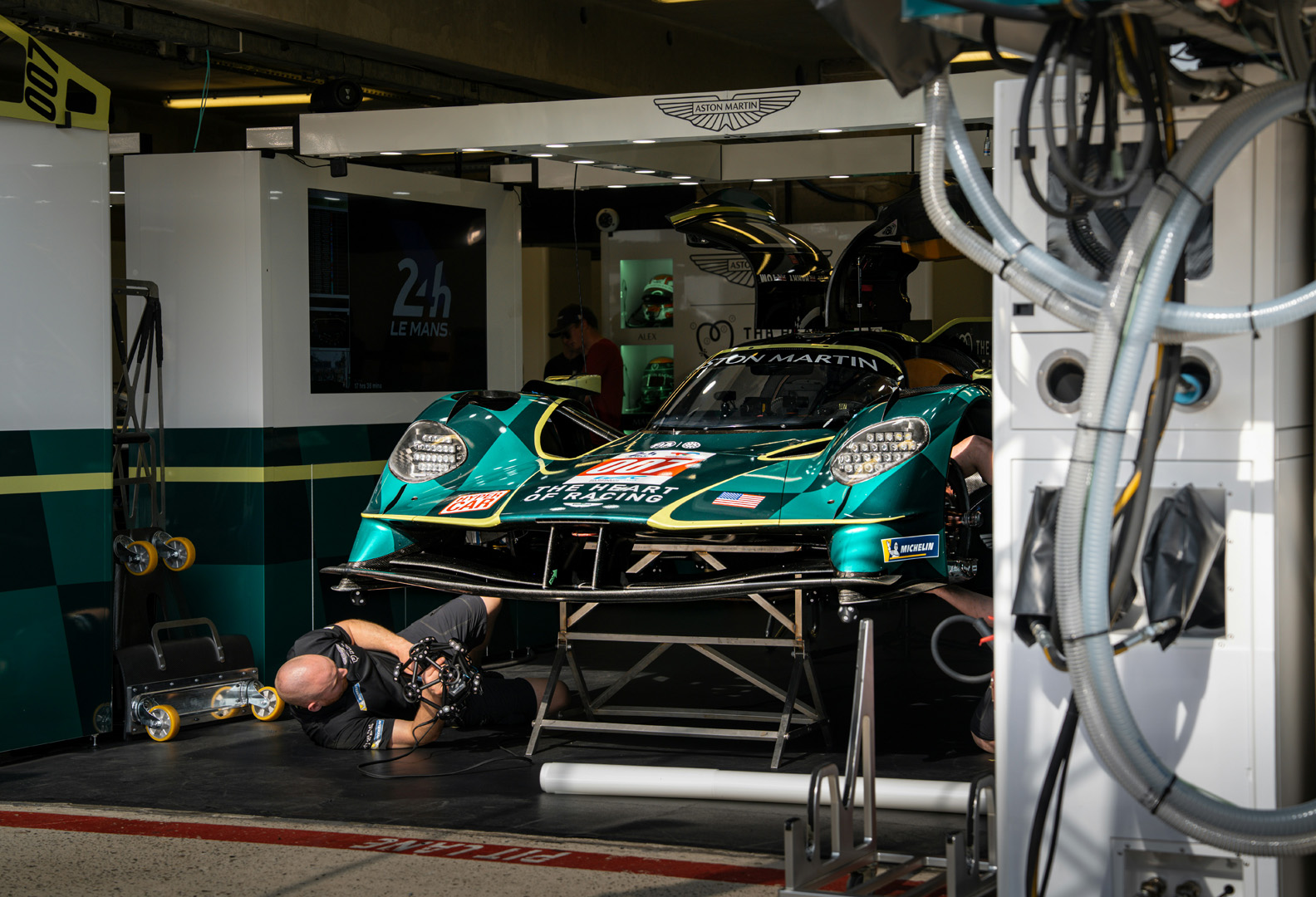
At the extreme end of the modern range, the Aston Martin Valkyrie represents the purest expression of that philosophy. Developed with Formula 1 expertise and now competing in the Hypercar class of the World Endurance Championship, it exists simultaneously as a road car and a racing programme.
“There’s no separation with Valkyrie,” Chilton explains. “It’s effectively a race car adapted for the road — and that means it has to be managed with the same level of precision.”

Zagato — Rarity and Craftsmanship
Alongside the DB lineage sits one of Aston Martin’s most important collaborations — with Zagato.
The Aston Martin DB4 GT Zagato is one of the most valuable Astons ever built, with just 19 originals and values now well into eight figures. Later models — including the V8 Zagato, DB7 Zagato and Vanquish Zagato — continue that tradition of limited production and distinctive design.
These cars combine rarity with bespoke construction, making them particularly sensitive to environment and handling.

Victor Gauntlett — Survival and Continuity
By the 1980s, Aston Martin faced another critical moment.
Victor Gauntlett’s leadership ensured the company’s survival, maintaining production and reinforcing the brand’s identity during a period of uncertainty. His stewardship also strengthened the James Bond connection, recognising its importance not just as marketing, but as a core part of Aston Martin’s global image.
That period was not defined by technical breakthroughs.
It was defined by continuity.
Ambition Without Limits — Lagonda and Bulldog
Aston Martin has always pushed boundaries.
The Aston Martin Lagonda, designed by William Towns, attempted to redefine luxury with radical design and early digital technology. It was ahead of its time, but the underlying systems were not always robust.
The Aston Martin Bulldog went further, conceived as a 200 mph supercar. Decades later, its restored form finally achieved that target — a remarkable demonstration of ambition carried through to completion.
These projects highlight a recurring theme.
Aston Martin has never been afraid to stretch beyond what is comfortable.

Modern Aston Martin — Structure, Ownership and Formula 1
Today, Aston Martin operates under a more stable and ambitious structure.
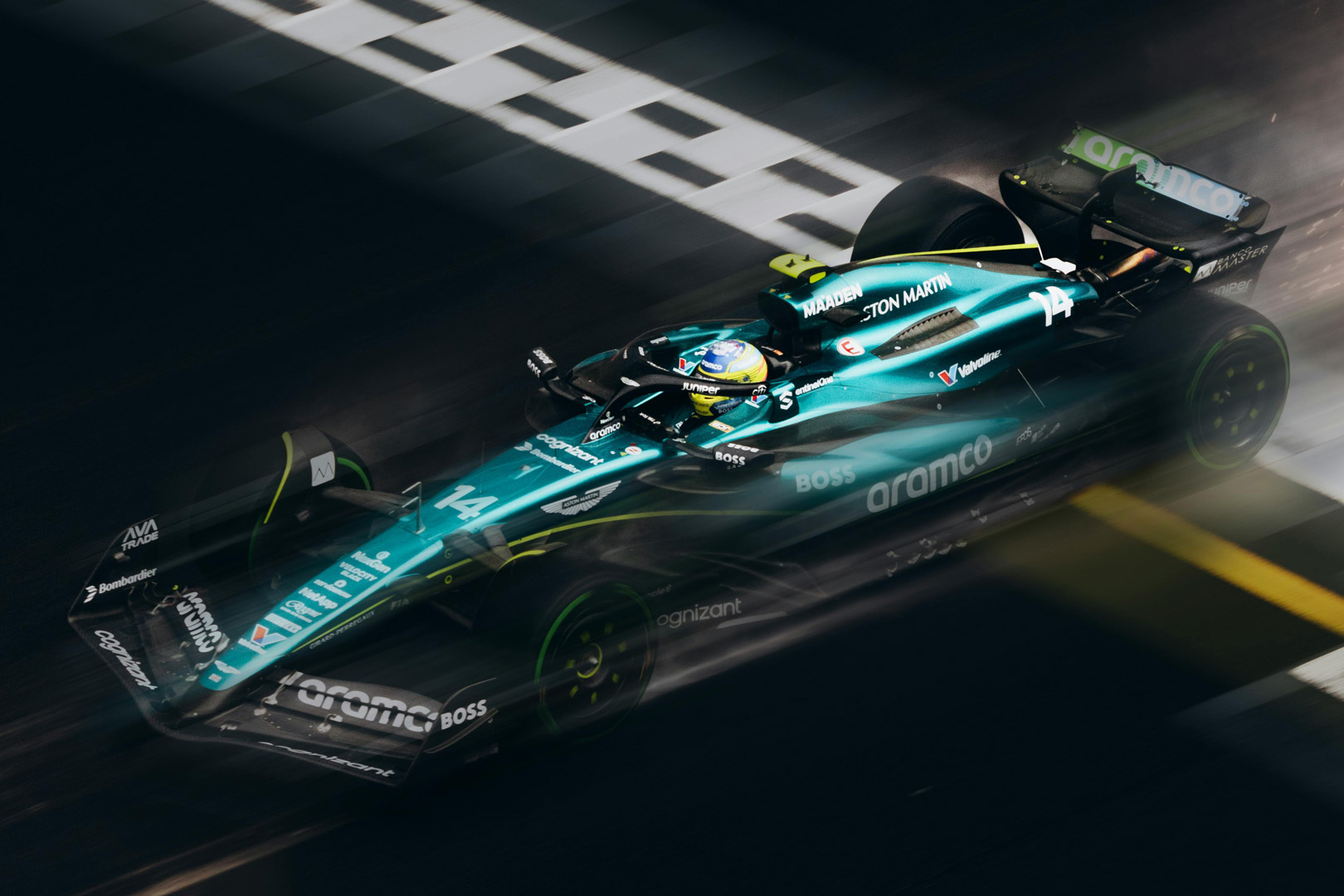
Led by Lawrence Stroll and a consortium of investors, the company has repositioned itself as a high-performance luxury brand with global reach. The Aston Martin F1 Team is central to that strategy, bringing the brand back to the forefront of top-level motorsport and reinforcing the link between road and race.
At the same time, programmes such as Valkyrie bridge that gap directly — combining Formula 1-derived thinking with endurance racing and road car engineering.
Modern cars such as the Aston Martin DB12 integrate advanced electronics, turbocharged engines and refined interiors, while values across the range now extend from around £150,000 to well beyond £3 million.
The scale is greater than ever.
But the variation remains.

Why Aston Martin Storage Requires Real Understanding
Aston Martin is not a uniform brand.
Cars from the David Brown era are materially sensitive and mechanically responsive. Cars from the Gauntlett era introduce electrical variability. Modern cars depend on system integration and consistency. Motorsport-derived cars demand even tighter control.
“Aston Martin isn’t one thing,” Chilton says. “That’s what makes it interesting. But it also means you have to understand the specific car you’re dealing with.”
Preserving the Identity
What defines Aston Martin is not just performance or design.
It is identity.
From its early racing roots, through the DB lineage, the cultural impact of James Bond, the resilience of the Gauntlett years, the Prodrive GT racing era and the precision of Valkyrie, the brand represents a unique combination of engineering and storytelling.
Preserving that means maintaining the conditions that allow the car to behave exactly as intended.
At Birch, that is approached as a controlled system — environment, handling and oversight working together to remove variability and ensure consistency. We call this The Birch Standard.
Because with Aston Martin, the difference is not always visible.
.jpg)