.jpg)
AC is often reduced to one car: The Cobra.
That is understandable. But AC’s identity was established long before it ever carried a V8 — and understanding that earlier history is essential to understanding how these cars behave today.
The company’s origins lie in a very different type of vehicle altogether.
.jpg)
From 1904, AC’s early success came from three-wheeled machines such as the Auto-Carrier — a simple, effective delivery vehicle —followed by the Sociable passenger version. These were not curiosities; they were commercially successful, widely used, and critical to the company’s survival in its formative years. They remained in production into the pre-war period before AC transitioned more fully into four-wheeled cars.
That matters, because it defines the marque’s DNA: lightweight engineering, mechanical directness and a reliance on use rather than dormancy.
By the 1920s, AC had moved into four-wheeled performance cars, underpinned by John Weller’s overhead-cam six-cylinder engine — a unit that would remain in production in various forms for decades. Cars from this period were already competing, including at venues such as Brooklands, where reliability and mechanical efficiency were exposed rather than concealed.
After the war, AC resumed production with the 2-Litre andcontinued to evolve its engineering approach. But the company also returned briefly to three wheels — not as a performance exercise, but as a practical solution.
The AC Petite of the 1950s and later the government-issued invalid carriages, including those built under contract by AC, represent a very different chapter. These were functional, often basic vehicles, produced in response to economic conditions and state demand rather than sporting ambition.
They sit uncomfortably alongside the Cobra in perception, but they are part of the same story.
A company that survived not through scale, but through adaptation.
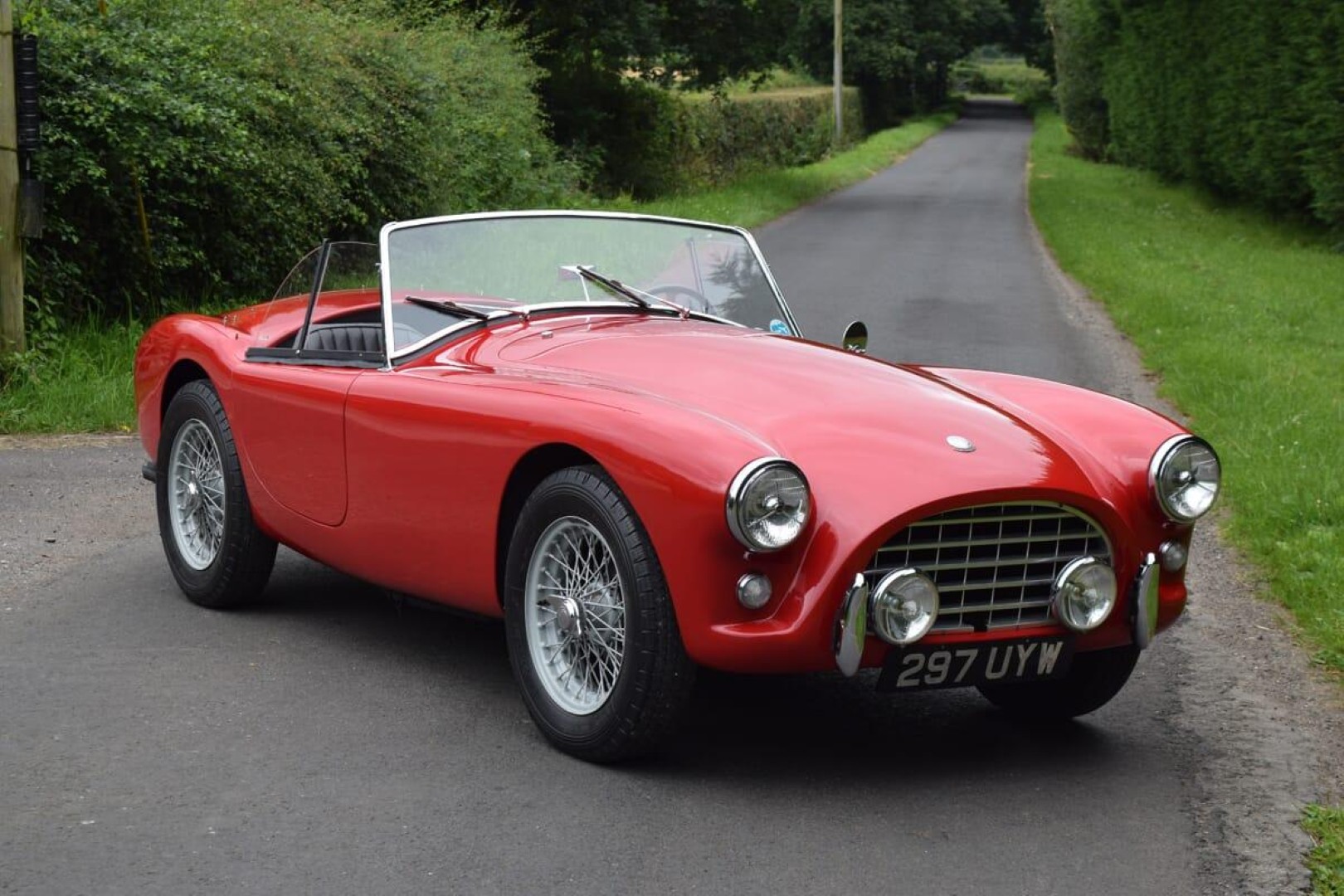
The AC Ace, introduced in 1953, brought the focus back to sports cars. Based on a lightweight tubular chassis and clothed in hand-formed aluminium, it embodied everything AC had become known for: simplicity, lightness and responsiveness. It also introduced the platform that would underpin the Cobra.
These cars are often described as simple. They are not.
They are mechanically transparent. And that transparency makes them highly sensitive to inactivity. Materials, tolerances and systems depend on consistency — not just preservation.
The Cobra amplified AC’s reputation, but it also created divergence within the marque.
The 289 Cobra remains closely aligned with the Ace inphilosophy — relatively light, balanced and usable. The 427, by contrast, required a fundamentally different chassis and operates under far greater mechanical stress. The two cars may appear similar, but they should be used and treated very differently.
Beyond the Cobra sits one of AC’s most overlooked cars: the AC Frua 428.
This was AC stepping into the world of grand touring —combining its engineering with Italian coachbuilding. Fewer than 100 were built, and they introduce an entirely different ownership dynamic. Steel bodywork, complex trim and hand-built construction shift the risk from purely mechanical into structural and cosmetic domains.
Then comes the 3000ME — a mid-engined car from the 1970s that reflects AC attempting to reposition itself again. Limited production, unconventional layout and period-specific engineering make it one of the least understood ACs, and one of the easiest to mismanage.
The pattern repeats. Reinvention, rather than evolution.
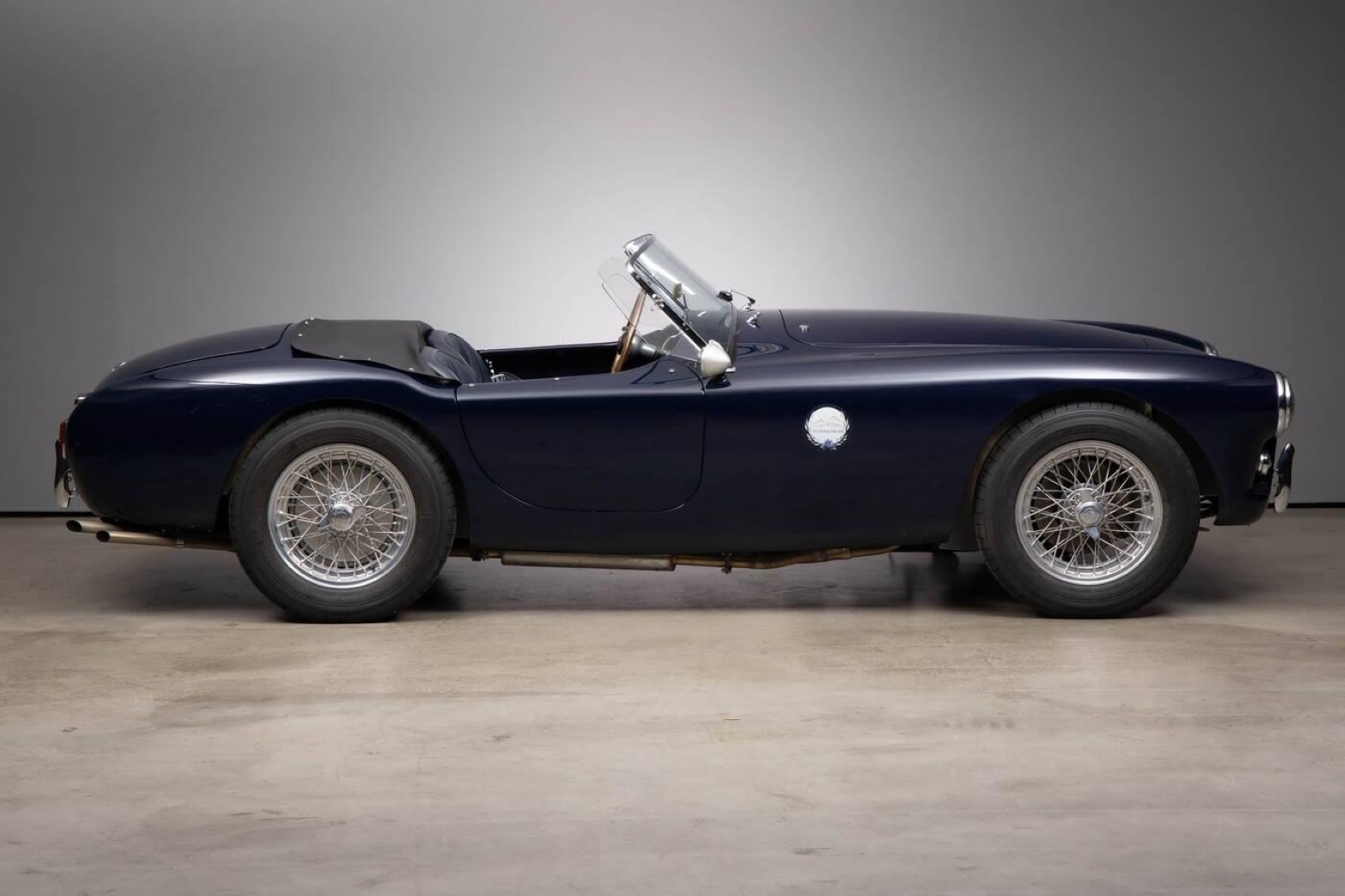
The Autokraft era brings that pattern back into focus. Under Brian Angliss, AC was effectively revived, with continuation Cobras built to a far higher level of consistency than many originals. Significantly, production took place at Brooklands — linking AC directly back into the same environment that had shaped its earlier competitive history.
Autokraft cars occupy a nuanced position today. They are neither original Cobras nor replicas, but something in between — authentic continuations with increasing collector credibility. Their construction blends traditional methods with more modern expectations, which again changes how they should be stored and managed.
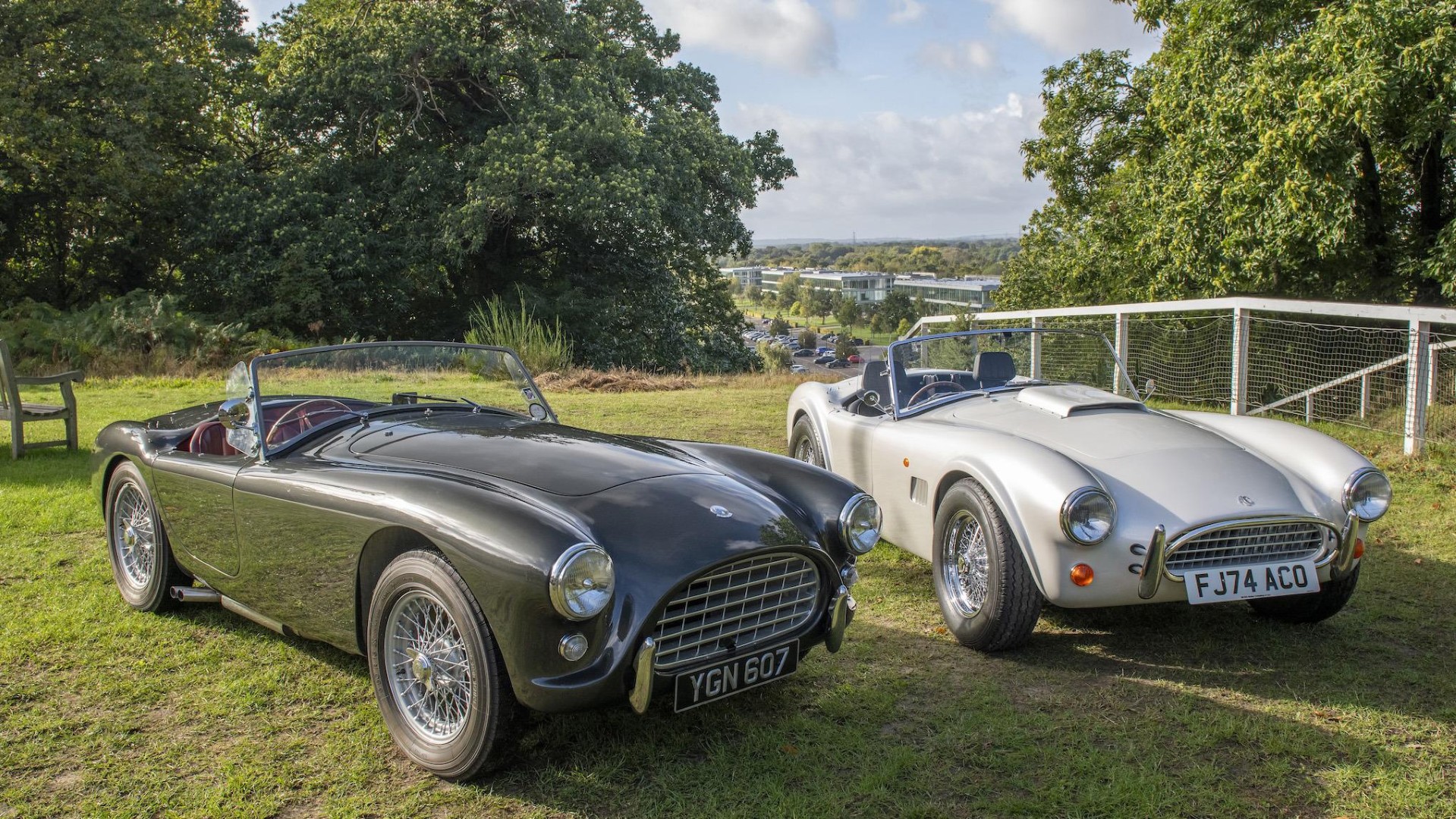
Autokraft cars occupy a nuanced position today. They areneither original Cobras nor replicas, but continuation cars with direct lineage, built with a level of consistency and engineering control that many1960s examples never had.
From there, the AC story becomes less linear — and more revealing.
The Ace, which had defined AC’s post-war identity, did not simply return in a single modern form. It resurfaced in phases. Ambitious concepts in the 1980s evolved into the AC Brooklands Ace of the 1990s —a low-volume, V8-powered roadster that carried the name forward but reflected avery different engineering context. Subsequent revivals through the 2000 scontinued that pattern, each iteration shaped as much by ownership and circumstance as by design intent.
The result is not a continuous lineage, but a series of interpretations — each visually connected, mechanically distinct.
Alongside this, the Cobra itself continued to evolve. The Autokraft MkIV established a modern baseline, and from it came further developments including the carbon-bodied AC Cobra CRS, where traditional aluminium gave way to composite construction. The architecture remained familiar, but the material behaviour changed — lighter, more rigid, less vulnerable to corrosion, yet increasingly dependent on environmental stability.
.jpg)
At the same time, the Cobra ceased to be confined to a single manufacturer.
Shelby American extended the concept in the United States through continuation series, while a broad and varied replica market developed in parallel — from simple kit cars to highly engineered recreations with contemporary performance and materials.
From a distance, it remains a single shape.
In reality, it is an entire ecosystem.
A 289 Cobra, a 427, an Autokraft MkIV, a Brooklands Ace, a CRS, a Shelby continuation and a high-end replica may all appear closely related. Mechanically, materially and structurally, they are not.
And yet, they are still often treated as if they are.
That is where ownership begins to drift away from understanding.
Because across all of this — from early three-wheelers to aluminium-bodied Aces, from coachbuilt Fruas to mid-engined 3000MEs, from continuation Cobras to carbon-bodied derivatives — the defining characteristicis not what they are made from.
It is how they respond to being left.
.jpg)
These are cars built around use. Not necessarily frequent use, but correct use — movement, temperature cycles, fluid circulation, mechanical continuity. Remove that, and the car begins to change.
“You can’t treat these cars as passive,” says Tom Chilton, Commercial Director at Birch. “Even the simplest ones need to be managed properly. Otherwise, things move away from where they should be — and you don’t always notice straight away.”
What shifts across generations is not the need for control, but the nature of the risk.
Earlier cars show it visibly — corrosion, perished seals,degraded fuel systems. Later cars show it differently — electronic inconsistency, thermal sensitivity, subtle material changes within composite structures.
The outcome is the same.
Not sudden failure.
But gradual dilution.
A car that becomes fractionally less precise. Less immediate. Less correct.
.jpg)
“Most problems come from inconsistency,” says Lee Sullivan, General Manager at Birch. “Different environments, different approaches, different levels of care. If you remove that variation, you protect the car properly.”
And that is where AC’s full history resolves into a single, consistent point.
Because this is not a marque defined by one era or one model. It is a sequence of reinventions — commercial three-wheelers, Brooklands-era competition, post-war pragmatism, lightweight sports cars, American V8 icons, Italian grand tourers, experimental mid-engined designs, continuation cars and modern composites.
Each phase changed the engineering. None of them removed the sensitivity.
AC cars do not disguise their condition. They transmit it.
Which makes storage less about preservation, and more about continuity — maintaining the conditions that allow each car, regardless of when it was built or how it was constructed, to remain exactly what it was intendedto be.
Consistently. And without compromise.



.jpg)